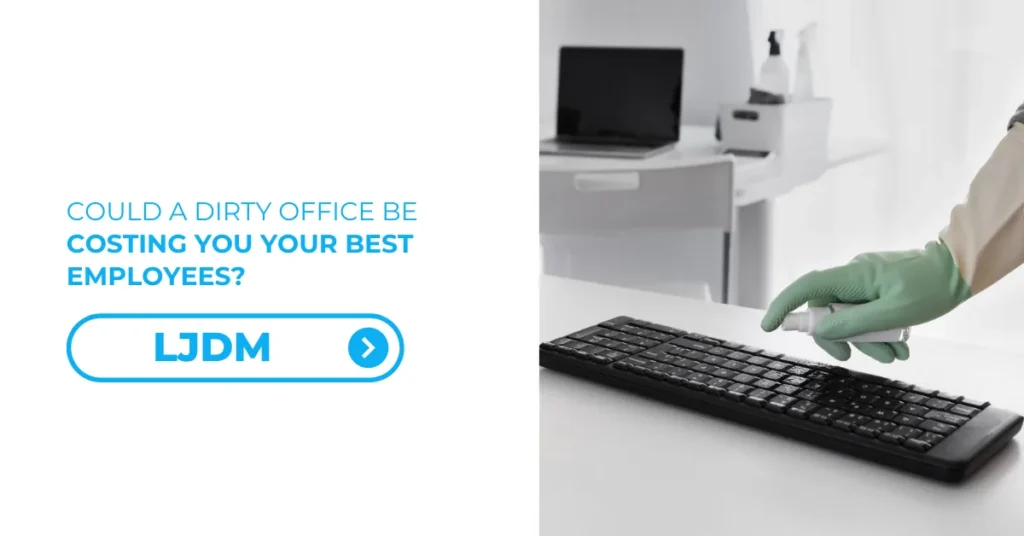
Alberta’s labour market has shifted. Across industries — from technology firms in Calgary’s innovation district to healthcare networks in Edmonton and hospitality operations in Kamloops — employers are competing aggressively for skilled talent in an environment where candidates hold real leverage. In this context, facility managers and business leaders are investing significantly in compensation structures, benefits packages, flexible work arrangements, and workplace culture initiatives to attract and retain the people their organizations depend on. What many of these same organizations overlook is one of the most cost-effective and immediately impactful contributors to employee experience: the physical cleanliness and hygiene standard of the workspace itself.
The Workspace Is a Statement About How a Company Values Its People
Organizational psychologists and workplace design researchers have extensively documented the relationship between physical environment quality and employee perception of organizational culture. The cleanliness of a workplace is not merely a functional matter — it is a daily, visceral communication from leadership to every person who works there. A consistently clean, well-maintained facility communicates that the organization invests in the experience of the people within it. A poorly maintained one — regardless of how progressive the company’s stated values may be — communicates the opposite through the environment every single working day.
This effect is particularly pronounced during the candidate recruitment phase. Studies in organizational behaviour consistently show that candidates form strong impressions of prospective employers during facility visits, and that workspace quality ranks among the top environmental factors influencing whether high-quality candidates proceed with an application or disengage. A tour through a cluttered, poorly maintained, or visibly unclean workspace can neutralize the positive impression created by an exceptional interview process.
The Absenteeism and Productivity Multiplier
Beyond attraction and retention, facility cleanliness has a measurable and direct impact on the workforce already inside the building. Research from organizations including the Harvard T.H. Chan School of Public Health has established clear correlations between indoor environmental quality — encompassing both hygiene and air quality — and employee cognitive function, productivity, and illness-related absenteeism.
In Alberta’s commercial and industrial facilities, where workers often spend eight to ten hours per day in the same physical environment, the compound effect of chronic exposure to poor hygiene conditions is significant. Elevated pathogen loads on high-touch surfaces drive illness transmission. Poor ventilation and accumulated dust trigger respiratory irritation and allergy symptoms that reduce concentration and increase sick day frequency. Restrooms and common areas that are not maintained throughout the day create the kind of daily frustration that, while rarely cited explicitly in exit interviews, consistently contributes to the ambient dissatisfaction that precedes resignation decisions.
The arithmetic is unflattering for organizations that view professional cleaning as a discretionary expense: the cost of a single salaried employee’s resignation — encompassing recruitment, onboarding, and productivity loss during the transition — consistently exceeds the annual cost of a comprehensive commercial cleaning program for a mid-sized facility.
Restroom Hygiene: The Benchmark Employees Apply to the Entire Organization
Within the hierarchy of workplace cleanliness factors, restroom condition holds a disproportionate influence on overall employee perception. Research in workplace satisfaction consistently identifies restroom hygiene as the single cleanliness factor most strongly correlated with overall employee satisfaction with their physical work environment — and most strongly correlated with client and visitor perception of an organization’s operational standards.
This connection is not arbitrary. Restrooms are used multiple times daily by every person in a facility. Their condition reflects the maintenance standard applied to the spaces that are least visible to clients and leadership — and employees know it. A company that maintains immaculate client-facing areas while tolerating substandard restroom conditions is implicitly communicating a hierarchy of care that perceptive employees identify quickly.
LJDM’s commercial janitorial programs address restroom hygiene with the frequency and thoroughness the research demands — not a single overnight clean, but scheduled daytime maintenance that ensures restroom conditions reflect the organization’s stated values throughout every operational hour.
The Client Visit Amplification Effect

The cleanliness of a facility does not only influence the employees within it — it amplifies or undermines the impressions made on every client, partner, investor, and vendor who visits. In Alberta’s business-to-business economy, where relationship quality and professional credibility are key commercial differentiators, the physical state of a workspace is part of the brand.
A manufacturing facility where production floors are clean and organized signals operational discipline and quality management — attributes that directly influence purchasing decisions for prospective clients assessing whether to place significant orders. A professional services firm whose offices are consistently well-maintained signals organizational stability and attention to detail. A hospitality operation whose back-of-house areas reflect the same standard as its guest-facing spaces builds the kind of operational trust that generates repeat business and referrals.
Each of these impressions is formed, in part, by the cleaning partner the organization has chosen — and the standard that partner maintains consistently, day after day.
Designing a Cleaning Program That Supports Your People Strategy
LJDM works with Alberta businesses across Calgary, Edmonton, Kamloops, and Kelowna to develop commercial cleaning programs that are explicitly aligned with the operational, cultural, and talent strategy goals of each client. This means understanding peak occupancy patterns and ensuring cleaning frequency matches them. It means identifying the high-visibility, high-impact areas — entrances, restrooms, boardrooms, break rooms, production floors — and calibrating service intensity accordingly. And it means delivering consistent, verifiable results through a documented program that gives facility managers the oversight they need to hold service standards accountable.
In a labour market where talent has options, the physical environment your organization offers is a competitive variable. Make it a strength.
Contact LJDM at office@ljdm.ca or 780-782-0502 to discuss a cleaning program designed to support both your operational excellence and your people strategy.