Healthcare facilities operate under a mandate that no other sector shares: the people within their walls are already vulnerable. Patients in hospitals, residents in long-term care facilities, and clients in outpatient clinics often present with compromised immune systems, open surgical sites, or conditions that render even low-level pathogen exposure potentially life-threatening. In this context, environmental cleaning is not a support function — it is a direct patient care intervention. For healthcare administrators and facility managers in Alberta and throughout Alberta, the standards governing environmental cleaning are non-negotiable, and the consequences of falling short are measured not in dollars alone, but in patient outcomes.
Healthcare-Associated Infections: The Stakes Are Quantifiable
Healthcare-Associated Infections (HAIs) — infections acquired in the process of receiving healthcare — are among the most studied and preventable sources of patient harm in the developed world. Data from public health agencies consistently identifies environmental contamination as a significant contributing pathway for HAI transmission, particularly for organisms like Clostridioides difficile (C. diff), Methicillin-resistant Staphylococcus aureus (MRSA), and Carbapenem-resistant Enterobacteriaceae (CRE) — all of which can persist on environmental surfaces for extended periods.
In Alberta’s publicly accountable health system, HAI rates are tracked, reported, and directly tied to facility assessments and funding evaluations. A healthcare facility whose environmental cleaning program fails to meet Alberta Health Services (AHS) standards faces regulatory scrutiny, reputational damage, and the profound ethical weight of preventable patient harm.
The Critical Difference Between Healthcare Environmental Services and General Cleaning
Healthcare Environmental Services (EVS) is a distinct professional discipline — not standard commercial cleaning applied to a medical setting. The distinctions are foundational:
Disinfectant Selection and Rotation: Healthcare EVS requires the use of hospital-grade, AHS-approved disinfectants with documented efficacy against healthcare-relevant pathogens. Product rotation protocols are critical to prevent the development of surface tolerance among target organisms — a nuance entirely absent from commercial cleaning programs.
Contact Time Discipline: In healthcare, dwell time is patient safety time. An EVS technician who wipes a disinfectant from a surface before the required contact kill time has not disinfected that surface. They have performed a theatrical gesture. LJDM’s healthcare cleaning technicians are trained and held accountable to exact contact time requirements, verified through supervision and documentation.
Terminal Cleaning and Enhanced Discharge Protocols: Patient room turnover in healthcare is one of the highest-risk transmission moments in the entire facility. Terminal cleaning — the complete, methodical decontamination of a patient room following discharge — must be executed to a standard that renders the space microbiologically safe for the next patient, regardless of the previous patient’s diagnosis. LJDM’s terminal cleaning protocols are built to meet and exceed Alberta Health Services guidelines.
Colour-Coded Equipment and Cross-Contamination Prevention: Healthcare EVS programs must employ colour-coded cleaning equipment (cloths, mop heads, buckets) to prevent the transfer of pathogens between zones — restrooms, patient rooms, corridors, and treatment areas each require dedicated tools. A single breach of this system can transfer C. diff spores from a contaminated restroom to a patient’s bedside table.
High-Touch Surface Prioritization: Nurse call buttons, bed rails, IV poles, light switches, bathroom surfaces, tray tables, remote controls, and sink hardware in patient rooms are disinfected with a frequency and rigor proportional to their role in pathogen transmission — far exceeding the general-surface cleaning schedule applied elsewhere in the facility.
Operating Room and Sterile Field Environments
Surgical suites represent the highest standard in healthcare environmental cleaning. Between-case room turnovers in operating suites must be completed within defined timeframes without compromising decontamination quality — a demanding balance that requires experienced, trained EVS personnel who understand both the clinical environment and the time pressures of surgical scheduling.
LJDM’s operating room cleaning protocols address all surfaces in the surgical field — including those above floor level, such as overhead lights, equipment arms, and monitor systems — using EPA and AHS-approved sporicidal agents where indicated. Air handling in surgical suites requires compatible cleaning chemistries that do not introduce aerosolized residues harmful to patients or staff, and our product selection reflects these clinical realities.
Isolation Unit and Outbreak Response Protocols
When an Alberta Health Services directive triggers enhanced precautions — whether for C. diff, influenza, norovirus, or another organism — LJDM’s healthcare environmental teams are prepared to respond with escalated cleaning and disinfection protocols immediately. This includes transitioning to sporicidal chemistry where indicated, increasing cleaning frequency for high-touch surfaces, and applying full Contact Precaution procedures to protect our own staff while containing the outbreak.
This rapid-response capability is not improvised. It is the product of pre-established protocols, trained teams, and the equipment inventories required to act immediately when a facility’s clinical situation demands it.
Compliance, Documentation, and Audit Readiness
Alberta Health Services inspections of healthcare facilities include direct assessment of environmental cleaning programs. A documented EVS program — with cleaning logs, product records, staff training certifications, and quality auditing evidence — is an essential component of regulatory compliance. LJDM provides healthcare clients with complete documentation infrastructure that supports audit readiness at all times, not just in the days preceding a scheduled review.
Beyond regulatory compliance, documentation serves the facility’s internal quality improvement process. Tracking cleaning frequency, product usage, and inspection outcomes over time reveals patterns that inform program improvement — a continuous quality cycle that reflects the standard of care healthcare facilities owe their patients and residents.
LJDM: A Healthcare Environmental Services Partner Built for Alberta’s Standards
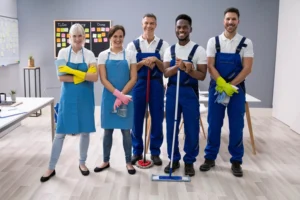
LJDM’s healthcare environmental services are designed from the ground up for the clinical realities and regulatory requirements of Alberta’s healthcare sector. Our teams receive healthcare-specific training, work under structured supervision, and operate with the documentation discipline that this environment demands. Whether you manage a hospital, long-term care facility, medical clinic, or outpatient centre in Alberta or Edmonton, LJDM brings the expertise and accountability your patients and your accreditation require.
Contact us today at office@ljdm.ca or 780-782-0502 to discuss a healthcare environmental services program tailored to your facility’s patient population, clinical scope, and compliance obligations.