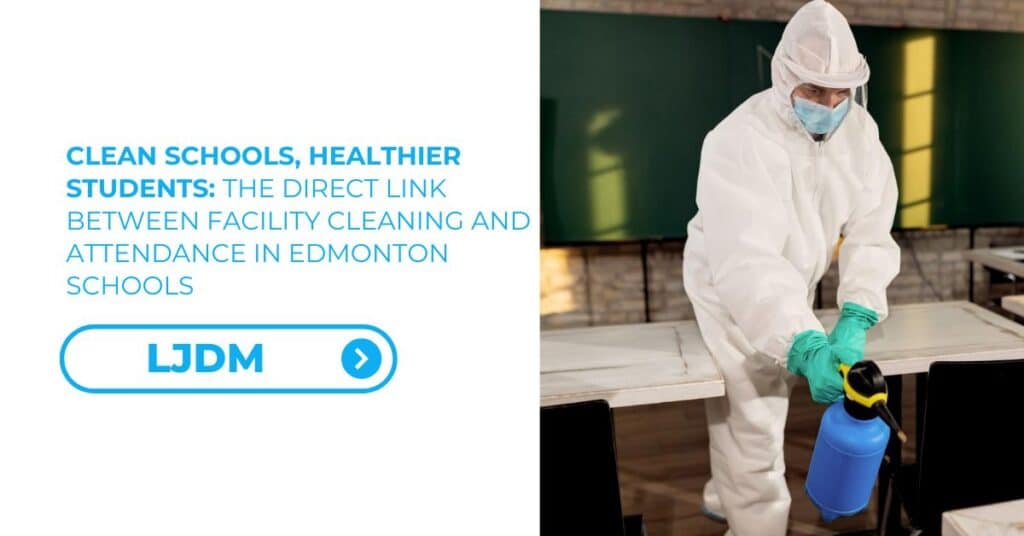
School administrators track attendance data closely because the connection between seat time and academic outcomes is well established. What receives far less attention is one of the most controllable drivers of absenteeism: the hygiene condition of the school facility itself. Classrooms, gymnasiums, cafeterias, and shared washrooms are among the highest pathogen-transmission environments in any community — dense populations, constant surface contact, and developing immune systems combine to make schools illness amplifiers when cleaning programs fall short. For school boards, private schools, and post-secondary institutions across Edmonton, professional education cleaning is a direct investment in attendance, achievement, and community health.
Why Schools Are Uniquely High-Risk Environments
A single classroom can see thirty students touching shared desks, door handles, learning materials, and technology throughout a day. Cafeterias concentrate hundreds of students around shared tables in short, high-turnover windows. Gymnasiums and change rooms combine moisture, shared equipment, and skin contact — ideal conditions for both viral transmission and fungal or bacterial concerns. Washrooms serve populations far larger than comparable commercial facilities, on fixed break schedules that create intense usage spikes.
Standard nightly cleaning addresses none of this in real time. By mid-morning, high-touch surfaces in an actively used school have returned to significant contamination levels — and remain there for the rest of the day unless a structured daytime protocol intervenes.
The Elements of an Effective Education Cleaning Program
High-Touch Disinfection on a Daytime Schedule: Door handles, handrails, washroom fixtures, water fountains, and shared technology disinfected during the school day — not just after dismissal — interrupt transmission cycles while students are present.
Washroom Servicing Matched to Break Schedules: Washrooms checked, restocked, and cleaned after peak usage windows maintain both hygiene and student dignity throughout the day.
Cafeteria Turnover Protocols: Tables and high-contact surfaces sanitized between lunch periods, with floors addressed for both hygiene and slip safety.
Gymnasium and Change Room Sanitization: Regular disinfection of mats, equipment, benches, and shower areas controls the skin-contact transmission risks unique to athletic spaces.
Seasonal Deep Cleaning: Summer, winter, and spring breaks provide critical windows for carpet extraction, floor stripping and waxing, high-dust removal, and ventilation cleaning that term-time schedules cannot accommodate.
Cleaning as Educational Infrastructure
Research on school environments consistently connects facility condition to outcomes beyond illness rates — including student behaviour, staff morale, and community perception of institutional quality. A visibly well-maintained school communicates institutional care to students, parents, and staff every single day.
LJDM provides education cleaning programs for schools and campuses across Edmonton and BC, built around academic calendars, board budget cycles, and the safety requirements of working in environments with children. Contact us at office@ljdm.ca or 780-782-0502 to discuss your school’s cleaning program.